Peptide Cycling: Benefits vs. Risks
Peptide Cycling: Benefits vs. Risks
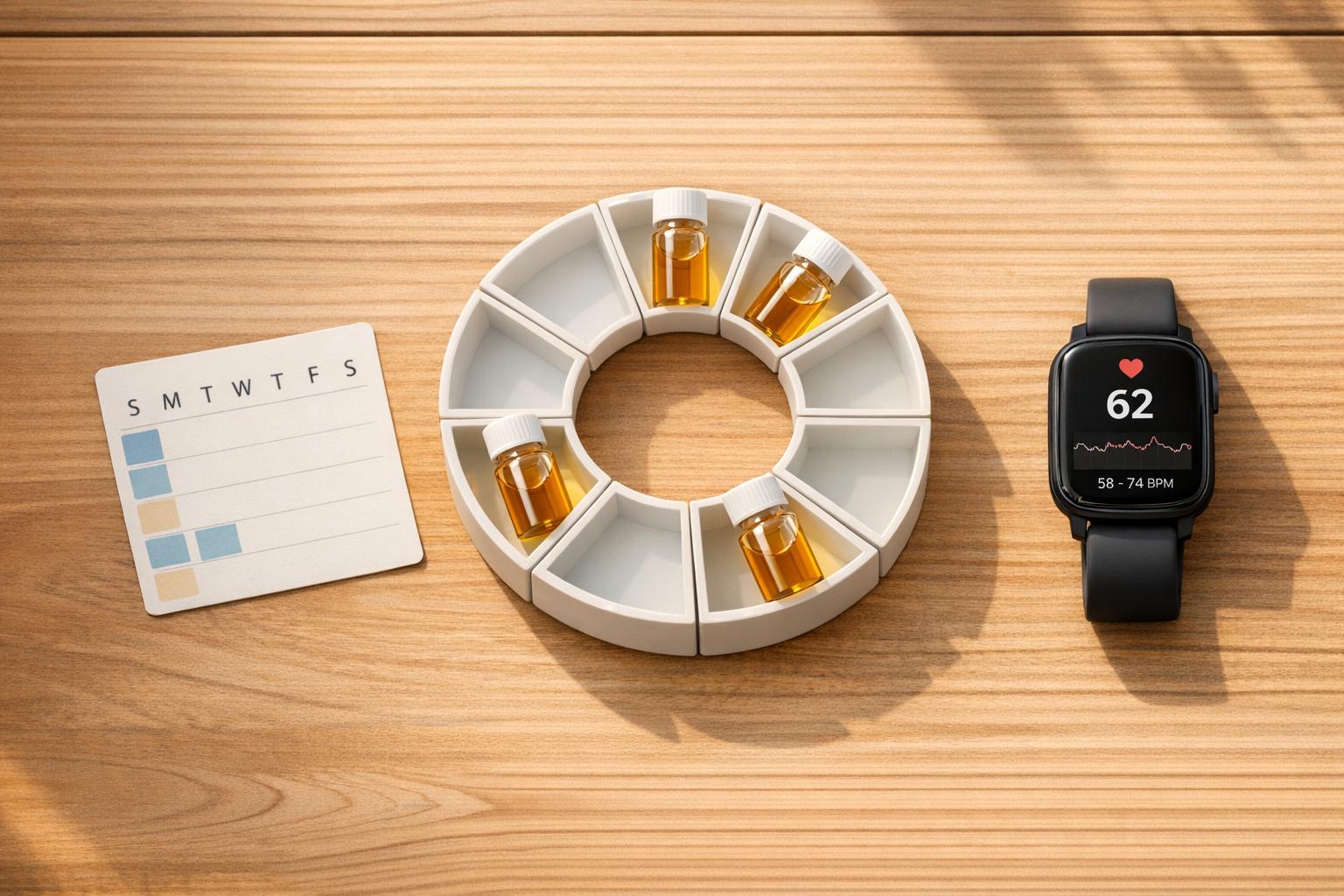
Peptide cycling involves alternating between periods of use ("on-cycle") and rest ("off-cycle"). This approach helps maintain effectiveness, reduce side effects, and prevent receptor desensitization. Continuous peptide use can lead to tolerance, increased side effects, and potential health risks like tissue overgrowth.
Key Takeaways:
- Why Cycle? Prevents receptor fatigue, maintains potency, and reduces risks.
- Typical Protocols: Use peptides for 4–12 weeks, followed by 2–8 weeks off.
- Benefits: Sustains results, avoids dose escalation, and lowers side effects.
- Risks of Continuous Use: Receptor downregulation, plateaued results, and higher side effects.
- Examples: Hexarelin (4–6 weeks max), MK-677 (8–12 weeks with glucose monitoring), BPC-157 (healing phase only).
Cycling ensures peptides remain effective while minimizing risks. Tailored schedules and regular monitoring are essential for safe, long-term use.
Benefits of Peptide Cycling
Prevents Receptor Desensitization
Using peptides continuously can cause your cells to become less responsive over time. This happens because of two processes: receptor internalization - where receptors are pulled inside the cell - and downregulation, where your body produces fewer receptors overall. When this occurs, the same dose that once worked well becomes less effective.
Taking breaks, or cycling, gives your receptors time to recover. During these off periods, internalized receptors return to the cell surface, restoring their density. Without these breaks, you might find yourself stuck in a plateau where the peptide no longer delivers results, often leading to the temptation of increasing your dose. Unfortunately, upping the dose only speeds up desensitization. By cycling, you reset your receptors and ensure the peptide remains effective over the long term.
Maintains Effectiveness Over Time
Cycling peptides strategically helps prevent tachyphylaxis - a rapid form of tolerance that makes peptides less effective. Instead of needing higher doses to see results, cycling allows you to maintain benefits with standard doses. This is particularly important with growth hormone secretagogues, as constant use can ramp up somatostatin, a hormone that suppresses growth hormone release.
A popular example is the "5-on, 2-off" protocol, where you use the peptide for five days and take two days off. This approach gives receptors time to recover without losing therapeutic momentum. For instance, IGF-1, which has a half-life of 12 to 15 hours, stays elevated even during the two-day break, allowing you to maintain results while giving your body a rest. Beyond maintaining effectiveness, cycling also plays a key role in minimizing potential side effects.
Reduces Side Effects
Cycling isn’t just about keeping peptides effective - it also helps lower the risk of side effects. Taking regular breaks allows your body to reset important metabolic markers, reducing issues like insulin resistance from MK-677 or elevated cortisol levels linked to GHRP-6. Physical symptoms such as water retention, joint pain, and numbness are also less likely when you allow your body time to recover.
Dr. Michael Nguyen, Pharm.D., sums it up well:
"Strategic cycling, not dose escalation, is the medically sound approach to maintaining long-term efficacy and safety".
If you notice signs like puffiness in your face, joint discomfort, or tingling sensations, it may be time to lower your dose or take a break. For peptides like BPC-157, which are often used for healing, cycling is particularly important. Once healing is complete, stopping the peptide reduces the theoretical risk of prolonged angiogenesis, which could potentially fuel the growth of existing cancer cells. In short, cycling doesn’t just protect effectiveness - it also helps safeguard your health by reducing the risks tied to continuous use.
sbb-itb-7fad836
Risks of Continuous Peptide Use
Receptor Downregulation
Using peptides continuously can cause your body to reduce the number of available receptors, which can lead to diminished effectiveness. Even if you stick to the same dose, the impact may plateau over time. This is why cycling peptides is often recommended - it helps maintain receptor responsiveness.
The timeframe for receptor downregulation depends on the specific peptide. For example, Hexarelin, one of the most potent growth hormone–releasing peptides, shows a significant drop in effectiveness after just 4–6 weeks of continuous use. Similarly, GHRP-6 begins to lose its impact after about 8 weeks. Increasing the dose to compensate only speeds up receptor desensitization and raises the likelihood of side effects. Long-acting peptides, like CJC-1295 with DAC, which has a half-life of 6–8 days (unlike the shorter-acting CJC-1295 No DAC), provide constant stimulation. This sustained activity disrupts the natural pulsatile release pattern of growth hormone, potentially leading to pituitary desensitization over time.
Increased Side Effects
As receptor availability decreases, the risk of side effects can rise. Continuous peptide use may amplify adverse effects, as the body struggles to reset critical metabolic markers. This can result in issues like elevated glucose levels, chronic water retention, and joint pain. Signs such as persistent puffiness or joint discomfort may indicate that the system is being overstimulated. For instance, long-term use of secretagogues like MK-677 can trigger the body's natural mechanisms to limit growth hormone release by increasing somatostatin production.
Regular monitoring of biomarkers like IGF-1, glucose, and lipid levels is essential to catch potential problems early.
Tissue Overgrowth Risk
Another concern with continuous peptide use is the risk of abnormal tissue growth. When growth hormone (GH) and insulin-like growth factor 1 (IGF-1) levels remain consistently elevated, the body may experience unchecked tissue growth, potentially leading to conditions like organomegaly or other abnormal growth patterns.
Healing peptides such as BPC-157 and TB-500 add a unique layer of concern. These peptides encourage angiogenesis, or the formation of new blood vessels, which is beneficial for healing injuries. However, prolonged use raises theoretical risks. Dr. Kristi Sawicki, PhD in Genetics & Epigenetics, explains:
"The same angiogenesis pathways that help heal a torn tendon are also ones that cancer cells can hijack to fuel growth and metastasis".
She further notes:
"Growth hormone and IGF-1 signaling promote cell proliferation and inhibit apoptosis. While GH peptides don't 'cause' cancer, they could theoretically accelerate growth of an existing tumor".
To minimize risks, practitioners typically recommend using healing peptides only until the injury has healed. These risks highlight the importance of following careful cycling protocols.
The Ultimate Guide to Peptides & How to Safely Take BPC-157 & TB-500 (Complete Protocols)
Benefits vs. Risks Comparison
Peptide Cycling vs Continuous Use: Benefits and Risks Comparison
Benefits vs. Risks Table
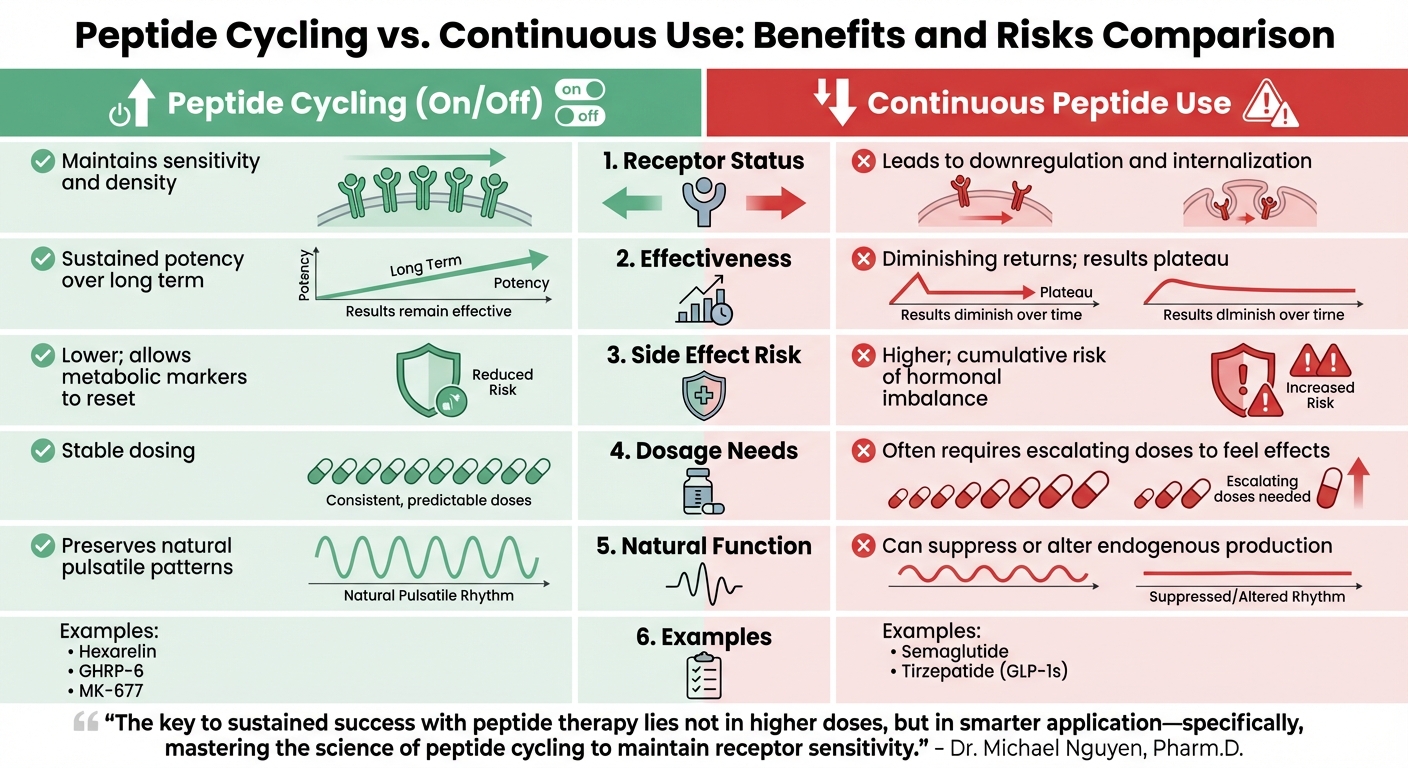
Peptide cycling works in harmony with your body's natural receptor activity, helping to keep receptor sensitivity intact. On the other hand, continuous use can lead to receptor downregulation, where cells reduce receptor availability to avoid overstimulation. This difference is crucial for maintaining the effectiveness and safety of peptide therapies over time.
The table below outlines the differences between cycling and continuous use, summarizing the mechanisms and risks discussed earlier. As Dr. Michael Nguyen, Pharm.D., explains:
"The key to sustained success with peptide therapy lies not in higher doses, but in smarter application - specifically, mastering the science of peptide cycling to maintain receptor sensitivity".
| Feature | Peptide Cycling (On/Off) | Continuous Peptide Use |
|---|---|---|
| Receptor Status | Maintains sensitivity and density | Leads to downregulation and internalization |
| Effectiveness | Sustained potency over long term | Diminishing returns; results plateau |
| Side Effect Risk | Lower; allows metabolic markers to reset | Higher; cumulative risk of hormonal imbalance |
| Dosage Needs | Stable dosing | Often requires escalating doses to feel effects |
| Natural Function | Preserves natural pulsatile patterns | Can suppress or alter endogenous production |
| Examples | Hexarelin, GHRP-6, MK-677 | Semaglutide, Tirzepatide (GLP-1s) |
This comparison makes a strong case for the importance of cycling peptides to maintain their long-term efficacy and reduce risks. By cycling, you allow receptors to recover and lower the likelihood of side effects tied to overstimulation.
For peptides like BPC-157 and TB-500, which are widely used for tissue repair goals, cycling is especially important. These peptides support angiogenesis, or the growth of new blood vessels, which speeds up healing. However, prolonged use could pose risks due to extended angiogenesis. For safety, practitioners often recommend using these peptides only during the healing phase - for 6–10 weeks on, followed by at least 4 weeks off. This method ensures the benefits of tissue repair while minimizing potential risks.
Cycling also gives key metabolic markers a chance to return to baseline levels. Without this recovery period, continuous use can disrupt these markers, which is why regular bloodwork - every 8–12 weeks - is critical for those who choose not to cycle.
How to Cycle Peptides
Cycling Protocols
To keep peptide therapy effective and prevent receptor adaptation, it's important to follow proper cycling protocols. A common approach is using peptides for 8–12 weeks, followed by a 4-week break. For example, cycling CJC-1295 + Ipamorelin this way ensures long-term effectiveness without overloading receptors.
Another option is the 5/2 protocol, where peptides are used for five consecutive days, followed by two days off (typically the weekend). This routine provides regular receptor rest and helps maintain the benefits.
Peptides like Hexarelin, which can quickly lead to tolerance, require a more cautious approach. Use Hexarelin for 2 weeks, then take a 4–6-week break. Continuous use beyond 2–4 weeks can desensitize the GHS-R1a receptor, reducing its effectiveness. On the other hand, bioregulators such as Epitalon are used in a pulse protocol: 10–20 days of intensive use, followed by a 4–6-month break. This allows for targeted benefits like telomerase activation without ongoing therapy.
If you're using multiple peptides, stagger their start and end dates by 1–2 weeks. This strategy helps isolate each peptide's effects and avoids simultaneous breaks.
Tailoring your peptide cycling schedule is key, as different health goals require unique approaches.
When to Cycle Specific Peptides
While general cycling guidelines provide a foundation, specific goals like injury recovery, fat loss, or anti-aging require customized schedules.
- Injury Recovery: Peptides like BPC-157 or TB-500 are typically used until the injury heals rather than on a fixed timeline. A common protocol is 4–8 weeks of use or until pain decreases by 80% and mobility improves. Many practitioners recommend starting with a loading phase - higher doses during the first 1–2 weeks - to saturate receptors, followed by a 5-on/2-off maintenance schedule until full recovery.
- Fat Loss: The cycling method depends on the peptide. For instance, GLP-1 agonists like Semaglutide and Tirzepatide are used continuously, while growth hormone secretagogues such as Tesamorelin are cycled. A typical Tesamorelin cycle involves 8–12 weeks on, followed by 4 weeks off to prevent receptor downregulation and maintain fat-burning effects.
- Anti-Aging: These protocols aim for long-term hormonal balance with periodic breaks to reassess baseline health. When using MK-677, monitor fasting glucose monthly during an 8–12-week cycle. If glucose levels exceed 100 mg/dL, pause use to restore insulin sensitivity. During the 4-week off-cycle, conduct blood tests - focusing on IGF-1, fasting insulin, and HbA1c - to ensure markers return to baseline before restarting.
For any new peptide, it’s best to start conservatively. Begin at the low end of the dosing range for the first 1–2 weeks to assess tolerance before gradually increasing the dose or combining additional compounds. Be mindful of physical signs like numbness, tingling in extremities, facial puffiness, or joint pain - these may signal the need for an immediate off-cycle. Unlike anabolic steroids, peptides don’t suppress the hypothalamic-pituitary-gonadal axis, so post-cycle therapy (PCT) isn’t required.
Conclusion
Peptide cycling is all about tailoring protocols to align with individual goals while maintaining the natural sensitivity of receptors. The idea is straightforward: taking strategic breaks helps prevent receptor desensitization, keeps treatments effective over time, and provides opportunities to evaluate progress through lab results and physical outcomes.
Experts emphasize the importance of this approach:
"The key to sustained success with peptide therapy lies not in higher doses, but in smarter application - specifically, mastering the science of peptide cycling to maintain receptor sensitivity." – Dr. Michael Nguyen, Pharm.D.
Skipping these breaks can backfire. Continuous use without cycling often leads to reduced effectiveness and increased risks. This can force higher doses, worsening side effects like water retention and joint pain. For growth hormone secretagogues, persistently elevated IGF-1 above 250–300 ng/mL has been associated with modestly increased risks of breast, prostate, and colorectal cancer in epidemiological studies. Additionally, a 2024 JAMA Network Open study found that semaglutide purchased from illegal online pharmacies contained only 7–14% of labeled purity, and a separate JMIR analysis identified endotoxin contamination in some samples, underscoring the importance of sourcing high-quality peptides.
These potential risks highlight the need for individualized protocols. Some peptides work best with cycling to prevent receptor fatigue, while others - such as certain GLP-1 agonists - are designed for continuous use. Regular monitoring of biomarkers like IGF-1, fasting glucose, and HbA1c every 8–12 weeks is essential. Equally important is verifying your peptide source with a batch-specific Certificate of Analysis confirming at least 98% purity.
The key to effective peptide therapy is balancing ambition with the body's natural limits. Start with the lowest effective dose and adjust only if you notice a plateau or side effects. For those seeking guidance, What Peptide (https://whatpeptide.health) offers evidence-based cycling protocols, independent purity testing, and harm reduction resources to help ensure safe and effective treatment.
FAQs
How do I choose an on/off cycle that fits my goal?
When deciding on an on/off peptide cycle that matches your goals, it's important to weigh both the potential benefits and risks. Cycling involves alternating between periods of use and rest to maximize results while reducing possible side effects. The cycle should be customized based on your specific objectives, like fat loss or muscle growth, as well as the type of peptide you're using. To ensure safety and effectiveness, consult a healthcare professional to determine the ideal cycle length, dosage, and rest intervals. Careful planning is key to achieving the best outcomes.
What labs should I monitor while cycling peptides?
It's essential to keep an eye on your blood work when using peptides. Ideally, tests should be conducted before starting and then repeated every 3–6 months. This routine helps track important health markers and catch any potential side effects early, ensuring peptide use remains both safe and effective.
Which side effects mean I should stop and take a break?
If you notice severe abdominal pain, allergic reactions, ongoing vomiting, symptoms of dehydration, a neck lump, or persistent hoarseness, it's important to pause and seek help. These signs could point to serious side effects that need prompt medical attention. Reach out to a healthcare provider right away if you experience any of these symptoms.